Monday, September 13, 2021

How Much Japanese Do You Need To Get By In Japan?

 One of the main things that makes people hesitant about coming to Japan is the language. In 2018 when I was planning my holiday this was my biggest fear. In reality if you are planning a holiday to Japan you don’t need to worry much about language barriers.

When on holiday in Japan you are most likely going to be visiting large tourist spots or big cities such as Tokyo, Osaka, Kyoto, Mt Fuji etc. In these spots you will find English support when checking into your hotel, at tourist information desks and tourist attractions. 


The Japanese Rail (JR) service is amazing as the signage at all train stations is in multiple languages. Also when you are on popular train lines the train announcements are in both Japanese and English. Even when you buy your train tickets at the machines you can change the language to English. Because of all this I am able to travel around Japan with ease.


English signage at train stations. Source: JPrail.com 

English signage at train stations. Source: JPrail.com 

When you eat at a restaurant in Japan the menus in the majority of cases are fully illustrated so you can simply point at what you want when ordering. Also in the bigger more popular tourist spots some restaurants may even have an English menu. 


One phrase that’s very useful when in a restaurant is “Sumimasen”. This phrase means “excuse me” and is used in restaurants and bars to get the serving staff’s attention. Some restaurants have a bell you can ring to get the attention of the staff but in the majority of cases you will definitely need to call the staff. At first I was very shy about doing this and used a very timid voice when calling the staff, but with time you will feel more confident doing so. 


When shopping all items are clearly marked with the price so you don’t have to worry about asking how much something is, however, the tax is not usually included in the price listed. In some cases, the English description is written on the packaging. For example, in convenience stores, the product description of every item is written in English. Sometimes the description can have errors and it is clear the translations may not have been approved by a native English speaker.


Items around my house with English item description

Hilariously bad translation of a blender we came across

One thing that is essential when planning your trip to Japan is internet access while you're out and about. I'd highly recommend renting a pocket WiFi or getting a temporary data sim. Both are easy to get in Japan at most airports or at tourist information offices. I actually bought mine prior to my trip on the JR website. Once you have WiFi you have access to Google Maps and Google Translate. To be honest I’d be totally lost without these two apps. 


So many people that I have met don’t know how useful the Google Translate app is. You can take a picture of Japanese text and it translates it instantly into English. Also you can use the microphone feature in which you speak into your phone and it translates for you. Obviously it may not always be perfect but in most cases I have found it extremely useful.


When you visit any country it’s always nice to be able to communicate with locals, so even though you don’t need to speak Japanese, it’s always nice to have a few polite phrases up your sleeve. When you do make an attempt to speak Japanese you will get a very positive reaction from locals, often in the form of "nihongo jouzu!", roughly translating to "skilled Japanese!". Here are a few basic phrases I’d recommend for anyone planning a trip to Japan.


Konnichiwa: This is the Japanese for “Hello”.


Arigato Gozaimasu: This phrase means “Thank you”, if this is too much of a mouthful you can simply say “arigato”


Sumimasen:   As I mentioned before this phrase means “Excuse me”. You will often hear people at bars and restaurants shouting out “Sumimaseeeeeeeeen!”.


Dozo: This is an amazing phrase that you can use in many situations. You can use it to say “Go ahead” for example when offering your seat on the train or if you're holding the door or elevator for someone. It can also mean “here you go”; this is often heard being said at shops when clerks are handing over goods. If you want to level up your language skills you can say “dozo yoroshiku” which means “nice to meet you”.


Ohayo Gozaimasu:  This is the polite way to say “Good morning” again you can shorten this to “Ohayo” if you find it easier.


Gochisou sama deshita: this phrase means "Thank you for the meal". It is a great phrase to use as you leave a restaurant. Again if this one is a bit difficult you can simply say "Arigato".


Okaikei kudasai: You can say this phrase when you are finished eating or drinking and you want the bill.


Living in Japan on the other hand is a totally different experience, I live in a rural area so only a small handful of people can communicate with me in English. This makes socialising very difficult, however, in my city they have a scheme in place that encourages the residents to communicate in “easy Japanese” to foreigners. 


This encourages residents to speak more casually to me instead of using formal language which can be more difficult to understand. Due to the corona virus it has become harder for me to communicate and get exposure to general conversation with the locals in person. Hopefully this will change once normal life returns.


Probably the most challenging aspect of living in Japan is the amount of paperwork that must be done to organise bills. All documentation is manual and in paper format which makes it very difficult when you are just learning to read and write in Japanese. I have to get support with this from my Japanese colleagues and friends regularly as it can be overwhelming to complete by myself. 


I have been living in Japan for 2 years now, I can read basic Japanese (I’m still learning the 1000s of Kanji characters πŸ˜…) and I’m taking lessons to improve my speaking ability. I’m definitely not a strong language person so it takes me a long time to pick up a language.  Hopefully in another couple of years Ill be able to communicate at a higher level.

Thursday, August 19, 2021

Kitsune - Clever Like A Fox

Over the last few weeks I have been doing some research on Yokai. Yokai are supernatural monsters, sprits in Japanese folklore. There is an amazing database of Yokai stories online: https://yokai.com. I have also been speaking to some of my Japanese friends about Yokai. There are many different types of Yokai creatures. One of my favourites and more well-known are Kitsune.

What are Kitsune?

Kitsune means fox in Japanese. Kitsune are very popular creatures in Japanese folklore. They are also heavily featured in Chinese and East Asian countries. Kitsune have many magical abilities such as:

  • The ability to shapeshift. Kitsune have the ability to shapeshift into human form and often disguise themselves as beautiful women or giant monsters. Kitsune were said to have kept a human form over long periods of time and often led long human lives in this disguise. In some stories the disguise fails when the Kitsune becomes careless or drunk revealing a fox tail, fang or fox ears.
The FoxWoman - Michinekomata
  • Wisdom and intelligence. Kitsune are known to have very long lives, in some cases they can live to be over 3000 years old. The older the fox is the more tails it has. Some of the more famous foxes have up to nine tails. With age comes wisdom, older Kitsune are said to be extremely intelligent. In some stories Kitsune are said to have long lives as they drain the life-force from humans around them.
  • The ability to produce fire. There are many stories about Kitsune producing fire by breathing or wagging their tails.

Kitsune and Nine Tailed Foxes in Popular Media

Kitsune are known widely across Japanese media especially in anime and manga, however, westerners exposed to this media most likely do not understand the links to Japanese mythology. Growing up in Ireland I enjoyed watching Pokemon on TV. As I got older I started watching the anime Naruto. At that time I didn’t know the influences Japanese mythology had on these shows. For example in the anime Naruto, the main character turns into a nine tailed fox. In the Pokemon series there is a fire type Pokemon called Vulpix who evolves into Ninetales that are based on Kitsune. In the Pokemon card game, there is a Ninetales card with the ability “Nine-Tailed Shapeshifter”. In the video game Okami, one of the major boss battles is against a beastly fox with nine tails. All of these characters are portraying a Kitsune.


Zenko Kitsune and Yako Kitsune

There are two main types of Kitsune, Zenko Kitsune and Yako Kitsune. Zenko Kitsune are good, kind creatures that provide protection and luck to humans. If you have visited the famous Inari shrine in Kyoto you may remember seeing large fox statues at the shrine.  These are Zenko Kitsune. They often have a key or a scroll in their mouth which provides messages from the gods. Japanese people often leave fried tofu at Inari shrines as this is the Kitsune favourite type of food.


 Flicker - St Steve 


Yako Kitsune on the other hand are mischievous, cunning creatures. They often play pranks on humans or disguise themselves as beautiful Japanese women. One of the most famous stories is about a Kitsune named Tomamo no Mae. It is said that she attempted to kill the then emperor of Japan Emperor Konoe. She disguised herself as a beautiful girl who the emperor fell in love with. Soon the emperor starts to feel very ill and they discovered that the young woman was in fact a Kitsune and was draining the life from the emperor in an attempt to become the ruler of Japan. Tomamo no Mae did not succeed in becoming the ruler of Japan, however, the emperor died young and heirless which resulted in the rise of the first shoguns in Japan.

Matthew Meyer yokai.com

My Observations

The Kitsune are incredible shapeshifters. From reading these stories I can’t help think of other shape shifting characters across Celtic and Norse mythology. What is interesting is that in most of these stories the shapeshifters original form is a god in human form that has the ability to shapeshift into an animal form. For example Loki from Norse mythology is known to have changed his form into other humanoid characters as well as a horse and a giant. In Celtic mythology Morrigan, the goddess of war often changed her form into a raven or a bull.

The only case I can recall of an animal changing their appearance into a human form originates in Scottish folklore. The Selkie, a mythical seal creature is known to transform into attractive men or women to lure humans into the water where they ultimately drown.

Now that I have learned more about Kitsune I will be more observant if I am visiting any Inari shrines in the future. There are also some festivals in Japan where people dress up as Kitsune and wear fox masks. For example there is Kitsune no Yomatsuri festival each year in early October in Niigata prefecture. At this festival a huge meal of fried tofu is prepared and left out for the Kitsune. A lantern procession is arranged in which people dress as Kitsune and a famous dance is performed. I would love to experience this festival or others like this before I return to Ireland.


Saturday, August 7, 2021

Summer in Japan

 I’m not a huge fan of summer in Fukuoka, mainly because it’s too hot and humid. If you plan to visit Japan I’d recommend visiting in the Spring or Autumn.  In August the average temperature is between 28-32 degrees Celsius, however, what makes this a little more painful is that the humidity is high, with an average of 75% - 85%. I spend as much time as possible indoors with the AC as for me this heat is uncomfortable.  In August thunder storms and typhoons are also common especially in Kyushu. There are some parts of the Summer that are interesting such as the summer festivals and the beautiful flowers and wildlife you can view.

Bugs, Insects and Animals in the Summer

Summer is also the time the bugs and insects start to increase. Most of these I actually really like to see around, for example you often see huge butterflies and dragonflies of all colours. Also the Cicadas come out in mid-July and create a nice atmosphere for the season. Fireflies are also common in the early Summer months. There are viewing spots you can visit all over Kyushu to see the fireflies.

One of my favourite creatures that are commonly seen here in the summertime are geckos. Last year I had one in my apartment, I called him Freddie. I was told by friends here that geckos are harmless and often in Japan they are called “house guardians” as they eat bugs that get into the house and scare off other insects from coming into your home.

Unfortunately there are other insects that are not so desirable.  Roaches start to appear as it gets hotter. There are some amazing pest control products you can buy to keep cockroaches out of your home so this has never been a huge problem for me. Also in Kyushu you must be very wary of the Mukade. These are very ugly centipedes that can inflict very painful bites.  Luckily I have not had any Mukade in my apartment but I have seen them outside and one turned up in my office last year which caused a minor panic in the teacher’s room. One of the scariest bugs you can find in Kyushu in the summer is the giant Japanese hornet. These are extremely dangerous as the sting can be fatal. I have luckily not come across these hornets in Japan yet.

Snakes are also around in the summer months, I have seen a couple of them swimming down the streams and rivers around my local area. Snakes are often found in rice paddies as they like to eat frogs and rodents. I’ve been advised that most of the snakes in my local area are harmless but other venomous snakes can be found in the more mountainous areas around me.

Obon and Summer Festivals

The best thing about the summer is the festivities. Obon normally takes place around the 15th of August every year and lasts 3 days. During this time most people visit their home and celebrate their ancestors. At this time of the year you will often see lanterns in the rivers which represent a guiding light for ancestor’s spirits to find their way home.


Also in summer there are normally huge fireworks displays in every city. People dress in Yukata (light summer kimono). Most people rent the Yukata for the day from specialist shops. The shop offers services such as rental and dressing of the Yukata, hairdressing, rental of accessories (footwear, bags and hair ornaments). Foreign residents and tourists are also encouraged to take part. Often shop owners will have some English to help foreign visitors. At the summer festivals there are normally lots of street food you can try. Unfortunately these festivals have been cancelled for the last 2 years due to the coronavirus. I really hope to enjoy this season again in 2022.

Flowers in the summer

The summer is a very popular time for flower viewing. Japan has many locations where you can visit flower fields. The sunflowers are the most common flowers seen in my local area. Many people gather to view the flowers and enjoy the scenery.


If the heat does not bother you too much maybe the summer is a great time to visit Japan but for me I prefer to explore Japan when it is a little cooler. If you do decide to come to Japan this time of the year keep yourself hydrated, wear strong sun protection and buy yourself a sun umbrella.

Saturday, July 31, 2021

Kagura: A Glimpse into Japanese Mythology

 I have always been extremely interested in mythology and folklore. It started in my teens where I started reading about European mythology (Norse, Celtic, Greek and Roman). This interest continued to my university years where I picked Celtic civilisation as my minor subject in my degree.

Living in Ireland I did not have any exposure to Japanese mythology and folklore. Since coming here I’m eager to learn what I can. I have decided to make a series of blog posts about this topic.

I am by no means an expert in this topic but I will do my best to share the knowledge I have learned and share my observations from a western perspective. In this blog post I will introduce the art form of Kagura and I will share a famous tale that is often re-enacted in Kagura performances.

Kagura

The first glimpse I had into Japanese mythology and folklore was when I went to Kagura festivals in early autumn 2019. Kagura is a sacred Japanese dance normally performed at Shinto shrines across Japan especially in spring and autumn seasons. The dance is accompanied by music played by a wooden flute and a large drum.


It is rare to find Kagura in urban areas, generally the performances are in the countryside which means most tourists visiting japan will not be exposed to it. Shimane prefecture and Kyushu are probably the most famous places you can see Kagura performances in Japan

Some performances re-enact epic tales about the Kami (Japanese gods) defeating demons or beasts. Most of these stories come from an 8th century text called the Kojiki. The performers wear elaborate costumes and masks which are made locally by experts in the community.

Susanno – The slaying of Yamata no Orochi

One of the most famous stories I have seen being retold in Kagura performances features a Kami called Susanno. In this story Susanno meets a distressed elderly couple. The couple explain that 7 of their 8 daughters have been sacrificed to a monstrous serpent and they fear that they will also lose their last daughter.

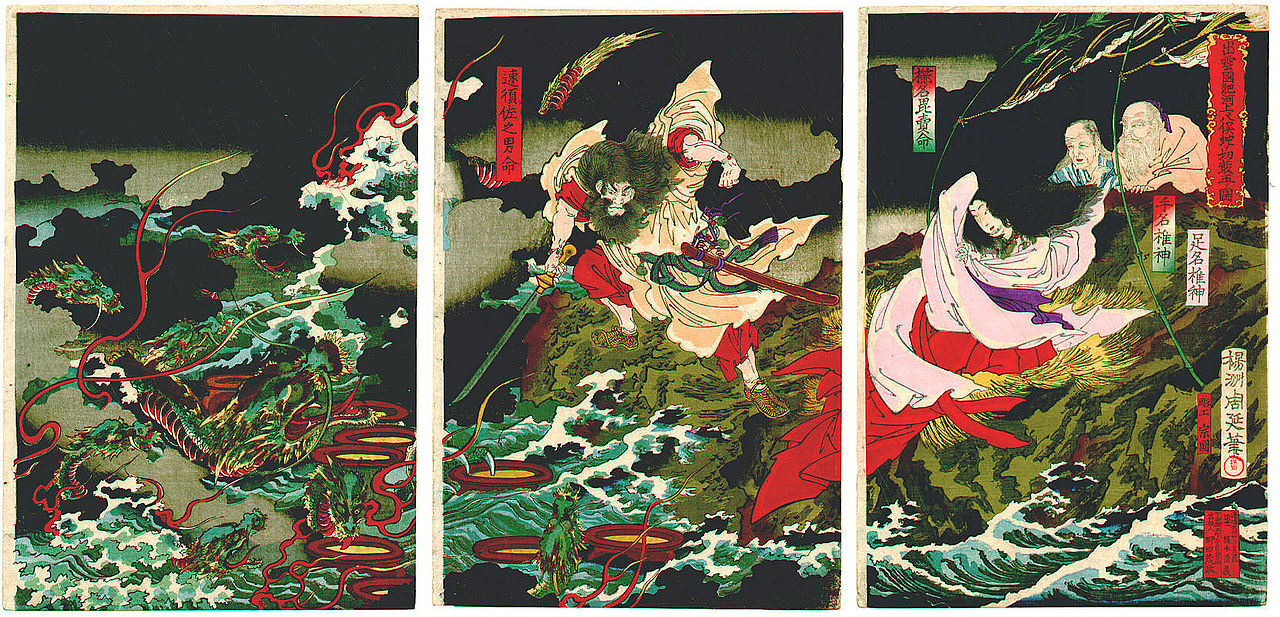
A woodblock painting of Susanno slaying Orochi by Toyohara Chikanobu 

The serpent they speak of is called Yamata no Orochi. This serpent is said to have 8 heads, 8 tails and bloody red eyes. Its body was said to be large enough to cover 8 valleys, it also had moss and cedar trees that grew upon it.

Susanno promises to defeat the serpent but in return requests the last daughter’s hand in marriage if he succeeds. The family agrees, Susanno turns the daughter into a hair comb and places it into his hair to keep the daughter protected. Susanno then requests that the family prepare the strongest sake they can make and to divide it into 8 large barrels.

The sake is prepared and left out for Orochi, and villagers hide and wait for him to arrive. Sure enough the serpent arrives and is delighted to see the sake left out.  The serpent drinks the sake, becomes very drunk and eventually falls asleep. Susanno takes this opportunity to attack and chops the beast into pieces. In doing this Susanno finds a legendary sword inside its tail. This sword "Kusanagi-no-Tsurugi" later becomes one of the 3 treasures of the Imperial Regalia of Japan. After Orochi is slain, Susanno returns the daughter to her human form and marries the maiden as agreed.


My observations of the story

This is one of my favourite examples of heroic literature. The story has some similarities to the Greek tale of Perseus and Medusa. In this tale, Medusa is a monstrous gorgon who has live snakes on her head. She is described as having piercing eyes that can turn you into stone if you look into them. Perseus defeats Medusa in exchange for the marriage of the maiden in distress. Additionally Perseus does not defeat her with brute force, instead he devises a cunning plan to use a mirror  causing her to look into her own eyes and turning to stone.


Tuesday, July 27, 2021

Nikko - My favourite place in Japan

 Nikko in Tochigi Prefecture is a 2.5 hour train trip from Tokyo and is my favourite place I’ve been to so far in Japan. I have been there twice now, the first time I visited it by myself when I was backpacking across Japan in 2018 and I visited Nikko again in 2019 with my partner.

The accommodation:

On both occasions I stayed in a traditional Japanese Inn, “Annex turtle Hotori-An”. The room cost about 110 Euro a night. The bedrooms have tatami flooring, futons and sliding doors. The bathrooms are shared with other guests. There is a private onsen which is absolutely gorgeous, as it looks over the forest and the Daiya river. Breakfast is included in the price and contains a boiled egg and a mixed assortment of fruit. As part of the stay you are given a yukata which you can wear freely around the Inn to help you feel relaxed.


Kanmangafuchi – A peaceful walk in a small gorge

Immediately outside the Inn there is a hiking stroll following the Daiya river. On my first stay in Nikko I woke up at 7am, had breakfast and decided to take the hiking trail. I walked around a curving path which was decorated with approximately 70 Jizo statues ( more affectionately called Ojizosan by most Japanese). The statues were dressed in red bibs and red crochet caps. 

At the time of my stay I had no idea what Jizo statues were. This was my first time seeing these statues but there are in fact 1000s of them around temples, shrines and hiking trails across Japan.  After talking with my Japanese friends I discovered that Jizo statues are devoted to Jizo Bosatsu, a deity in Japanese Buddhism. This deity protects children, and the statues are said to grant wishes for safe childbirth and to protect children from illness. The hiking trail follows the river through a forestry area for about an hour and ends at a beautiful small gorge. 


Toshoga temple and the five story Pagoda

One of the main attractions in Nikko is Toshoga temple. The five story Pagoda is seen at the entrance gate.  The temple itself has many elaborate wood carvings, with one of the most famous being the “see no evil, speak no evil and hear no evil” monkeys.

Kegon Waterfall

I’ve seen plenty of waterfalls since I came to Japan but Kegon falls, with a height of 97 metres is the most breath-taking. To access the waterfall you can get a bus for about 10 euro up a winding mountainous road.


There is loads to do in this area but unfortunately I didn’t have time to fully explore this part of Nikko, for example, there is a cable car you can take with views of the area including Kegon waterfall. There is also a theme park “Edo wonderland” where you can learn about the Edo period in Japan,

Kinugawa river boat tour

As you may have noticed from my previous post about Yanagawa I absolutely love river tours. The one in Nikko is absolutely stunning. This boat tour lasts about 40 minutes and cost about 25 euro. Two boatmen guide the boat down the river where you can see scenic views of the gorge surrounding the river. There are some rapids along the tour but safety jackets are provided to keep everyone safe.   When I took the bout tour the river was a light olive colour which I have never seen anywhere else.


If you are feeling more adventurous there are also areas around the river to go rafting or canoeing. It is best to book these experiences a day or two in advance. The bookings for all these water excursions need to be arranged in Japanese so you should ask the staff at your accommodation to help you make a booking.

Concluding thoughts

I’m not sure why exactly Nikko stands out to me so much. It may have been because Nikko was the first area I visited in Japan that had a more rural feeling that is drastically different to the bustling cities of Tokyo and Osaka. I would love to return for a third time, ideally in November to experience Nikko in the autumn foliage. If you are planning a trip to Tokyo I would highly recommend a night or two stay in Nikko.


Saturday, July 24, 2021

Yanagawa - A Peaceful Boat Cruise

 In August 2020 I set off with some of my friends to Yanagawa in Fukuoka prefecture. Yanagawa is famous for its eel dishes but we were more interested in exploring the canals of the city. Originally Yanagawa was a farming village, large canals were built for irrigation. Today the area is a famous tourism spot in which tourists can rent a donkobune, a low flat boat navigated via a long pole. The boats are similar to the gondolas seen in Italy. The boat rides cost about 15 euro per person and lasts about 80 minutes.


It took us 1.5 hours to drive there by car. We booked the donkobune ride for 6.30pm, as the sun was coming down. It was very quiet at this time as most tourists visit the area during the day and take the train back to Fukuoka city in the evening. We were extremely lucky as we had the whole canal to ourselves. We brought dinner with us, we made ourselves a karaage bento (fried chicken with boiled rice). 

There was a small table in the center of the boat which we used to eat and have a couple of drinks. The captain entered the boat and stood at the back, he navigated the canal by using a large pole. Throughout the ride he pointed out historical parts of the city. At the front was a paper lantern so we could clearly see when the sun went down.


The highlight of the evening was when we passed some waterfront shops which sold snacks, sweet sake and souvenirs. The shops were closing down as it was late in the evening but one of the owners came out to greet us as we passed by. As we went under a wide bridge the captain ducked down and began to sing a traditional song. There is an echo under the bridge so his voice could be clearly heard. Overall the experience was very memorable, if you ever come to Kyushu I'd highly recommend coming here. 


Every March there is a large festival in Yanagawa called the "Ohina-sama Water Parade". During this festival young girls dress up in elaborate kimonos and  ride down the canals. unfortunately due to the corona virus this festival has been cancelled for the 2 years that I have lived here. Hopefully I will experience it in March 2022.


Friday, July 23, 2021

Living in a Sleepy Town in Fukuoka Japan

 My husband and I live in a small town in Fukuoka prefecture, Japan. When I was first placed here two years ago I was a little hesitant, however, after being here for some time I’m delighted with my placement. We are about 1.5 hours from Fukuoka city which is the largest city in Kyushu and about 1 hour from Beppu, the famous onsen city.


When I say small town, there is actually 25000 people living here. This is a huge population in comparison to the small town in Ireland (Boyle, County Roscommon), that I grew up in, which has a population of 2500. Despite this the town seems so much more rural than Boyle.

The main signs of life is from the schools in the area. Large amounts of students can be seen on their commute to and from school every day, but outside of this the town is in a quite slumber. We have two convenience stores, a Family Mart and a 7/11, a 100 yen store, a few grocery stores and a couple of small restaurants dotted around the town.

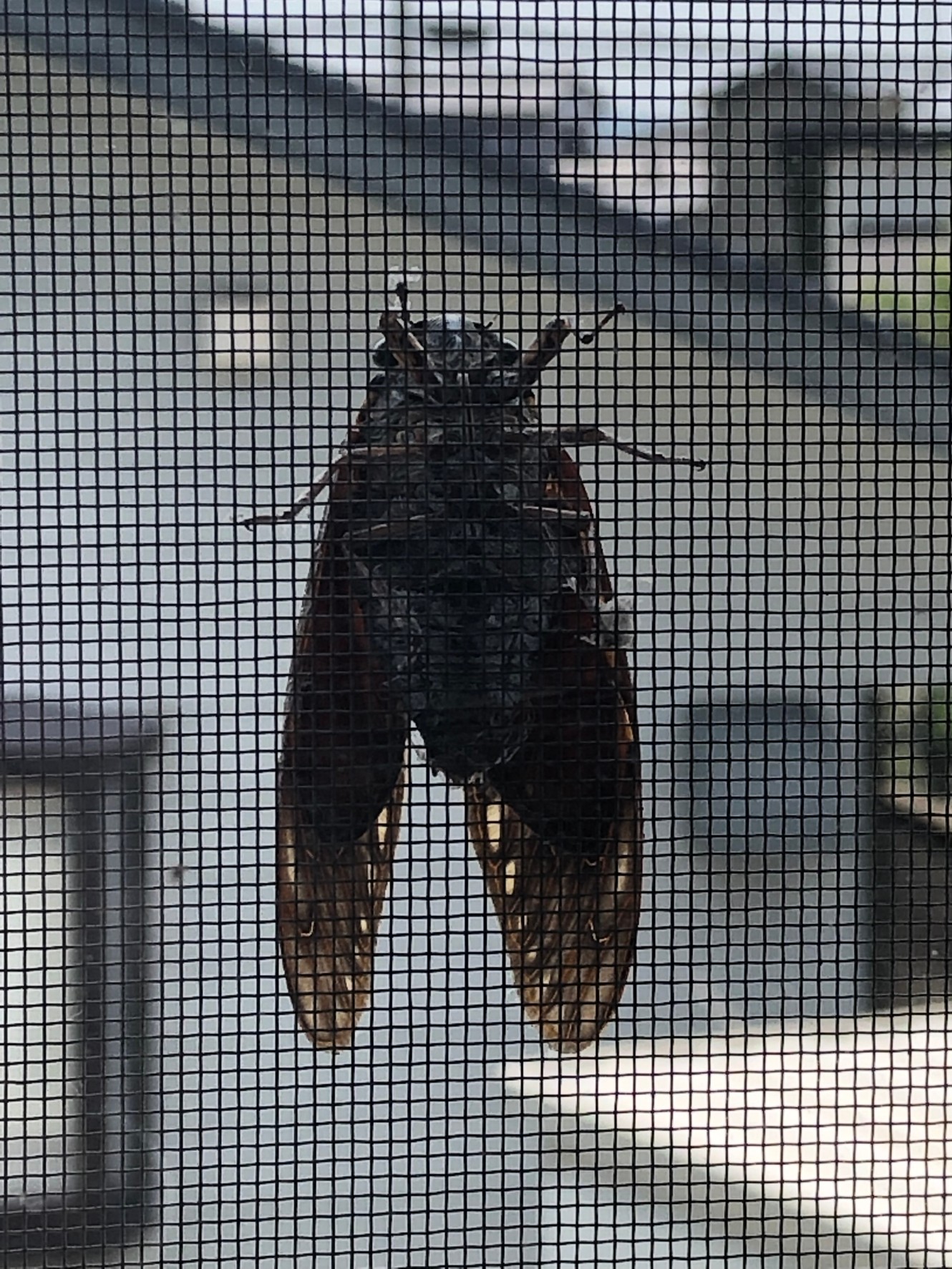
We live on the second floor of a small apartment complex. In the summer months we can hear the cicadas screaming outside the front of the apartment. At night time we are lulled to sleep by the sounds of the chirping of the crickets. At the back of the apartment there is a small pond so we can hear the low vibrations and croaks of the bull frogs and the general chirps and squabbles from the birds.

When I moved here first the sounds of the wildlife were distracting rather than peaceful. I remember the cicadas were so loud that they woke me from my sleep. I find the croaking frogs very entertaining and they still put me in a fit of giggles most evenings.

One of my favourite things to do is to take a wander around the outskirts of the town. There are a couple of small shinto shrines hidden around which normally have some cats hanging around eating some food that locals have left out for them. When I find them I feel like I’m in a studio Ghibli movie.

There are plenty of beautiful rice paddies scattered around the landscape. Coming from Ireland I have little knowledge of growing rice so it is nice to see the stages during the four seasons. It reminds me of Irish bogs and the steps you have to take when cutting turf.


I enjoy looking at the different types of architecture around the town from the traditional kawara roofs ( clay tile roofs) to western style houses that look like doll houses taken directly from the set of the Truman show. Some of the houses are very worn down and look like they have been abandoned, however, much to our surprise we have noticed that most of these homes are actually occupied.

This town has many similarities to rural towns in Ireland. The majority of the population appears to be from the older generation or young families. Most of the youth in this area finish school and move to larger cites. I suppose there are little job opportunities which causes many to leave the area. Also most people living here can drive and prefer to do their shopping and to socialize in the larger neighbouring towns and cities.

Despite it being a sleepy town, we are both really happy with our surroundings. Most foreigners that visit Japan only get to experience living in big cities and have very little experience of living in a more rural location. The people that live here are extremely kind and patient with us and our extremely poor knowledge of the Japanese language. More importantly we feel that we have experienced a different side of Japan, not the Japan that can be found in holiday brochures.

Christmas In Japan

  This will be my third Christmas in Japan. It is a strange time of the year for me. Less than 1 percent of Japan’s population identify them...